



TLR7 Inhibitor
- 1
- 2
-
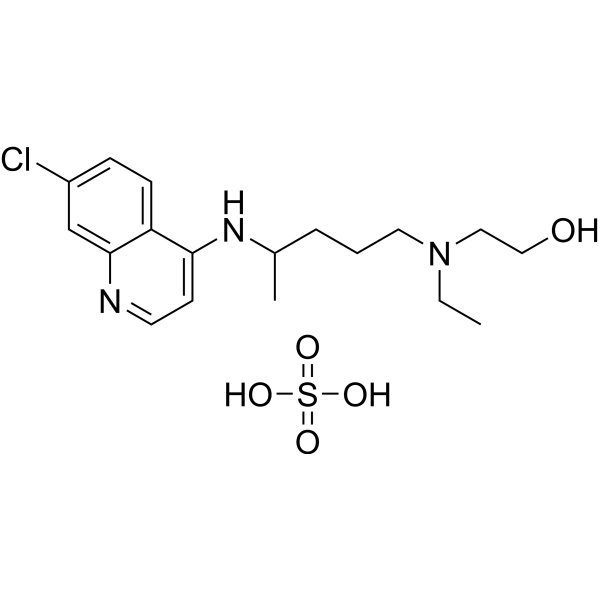
Hydroxychloroquine sulfate
 0 Images
Hydroxychloroquine sulfate (HCQ sulfate) is a synthetic antimalarial agent which can also inhibit Toll-like receptor 7/9 (TLR7/9) signaling. Hydroxychloroquine sulfate is efficiently inhibits SARS-CoV-2 infection in vitro.
-
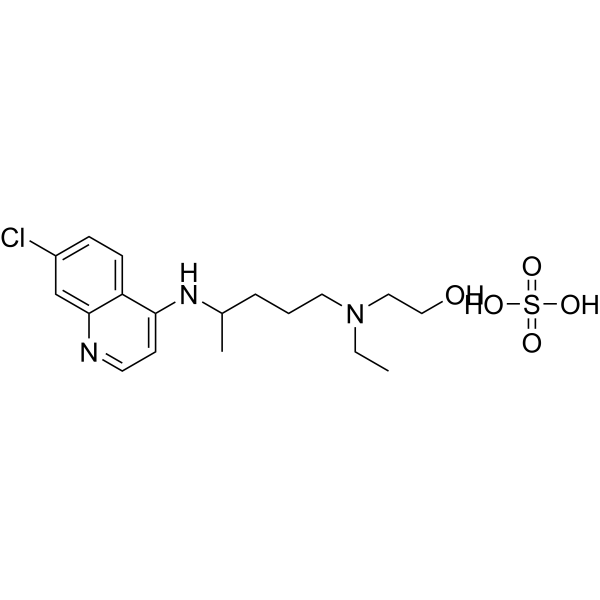
Hydroxychloroquine sulfate (Standard)
 0 Images
Hydroxychloroquine (sulfate) (Standard) is the analytical standard of Hydroxychloroquine (sulfate). This product is intended for research and analytical applications. Hydroxychloroquine sulfate (HCQ sulfate) is a synthetic antimalarial agent which can also inhibit Toll-like receptor 7/9 (TLR7/9) signaling. Hydroxychloroquine sulfate is efficiently inhibits SARS-CoV-2 infection in vitro.
-
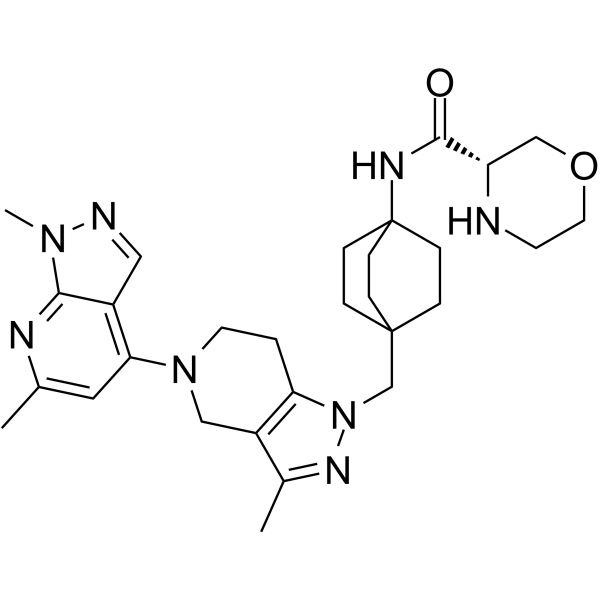
TLR7/8-IN-1
 0 Images
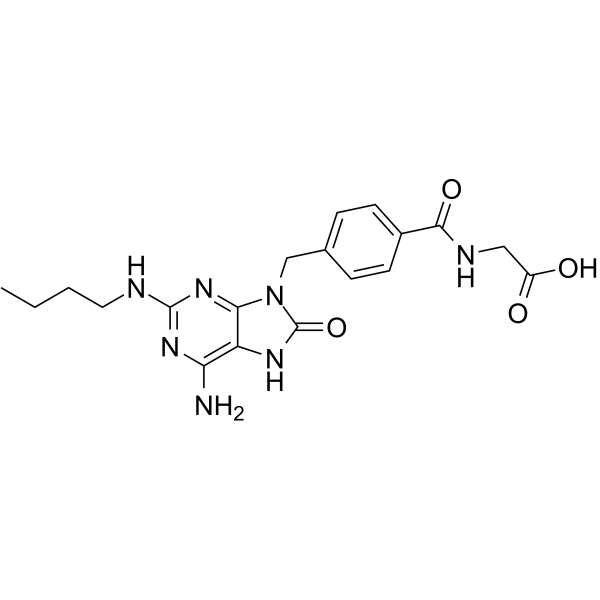
TLR7/8-IN-1 is a crystalline from of a TLR7/TLR8 inhibitor extracted from patent WO2019220390, compound 2b. TLR7/8-IN-1 can be used for the research of autoimmune disease.
-
E104
 0 Images
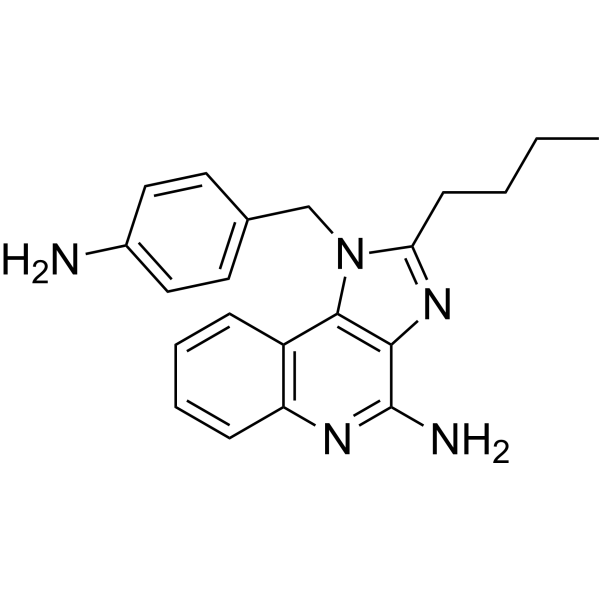
E104 (compound 1) is a potent and selective TLR7 agonist. E104 can be delivered by antibody-drug conjugate (ADC) technology to elicit potent anticancer activity. E104 induces the activation of mouse macrophages and hPBMCs.
-
ODN 20844
 0 ImagesCat. No.: HY-150736CAS No.: 1964506-29-3
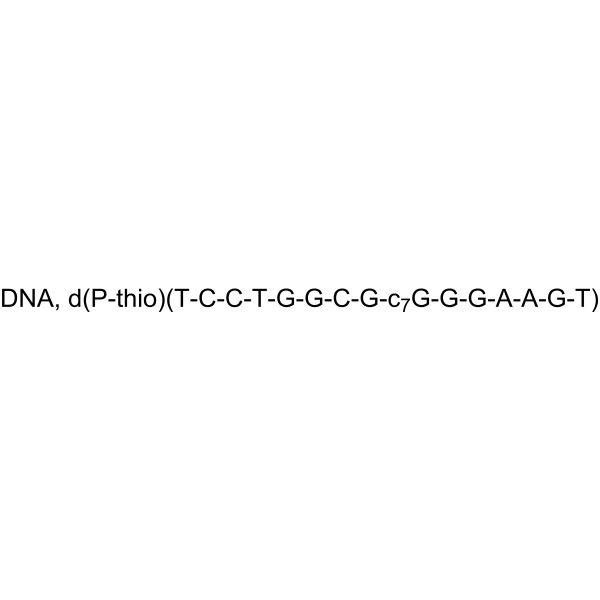
ODN 20844, a guanine-modified inhibitory oligonucleotide (INH-ODN), is a TLR7 and TLR9 (Toll-like receptor) inhibitor, and its parent is INH-ODN 2088. ODN 20844 disrupts TLR7- and TLR9-mediated immune cell immune responses. ODN 20844 sequence: 5'-TCCTGGCGc7GGGAAGT-3'.
-
ODN 24888
 0 ImagesCat. No.: HY-150744CAS No.: 1964506-30-6

-
(S)-Hydroxychloroquine
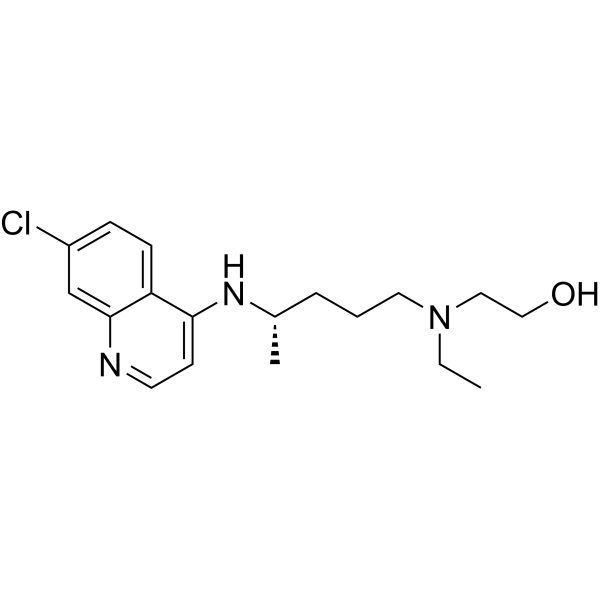 0 ImagesCat. No.: HY-B1370ACAS No.: 137433-24-0Synonyms: (S)-HCQ
(S)-Hydroxychloroquine ((S)-HCQ) is the enantiomer of Hydroxychloroquine. Hydroxychloroquine, a synthetic antimalarial agent, inhibits Toll-like receptor 7/9 (TLR7/9) signaling, and shows efficiently inhibits SARS-CoV-2 infection in vitro.
-
(R)-Hydroxychloroquine
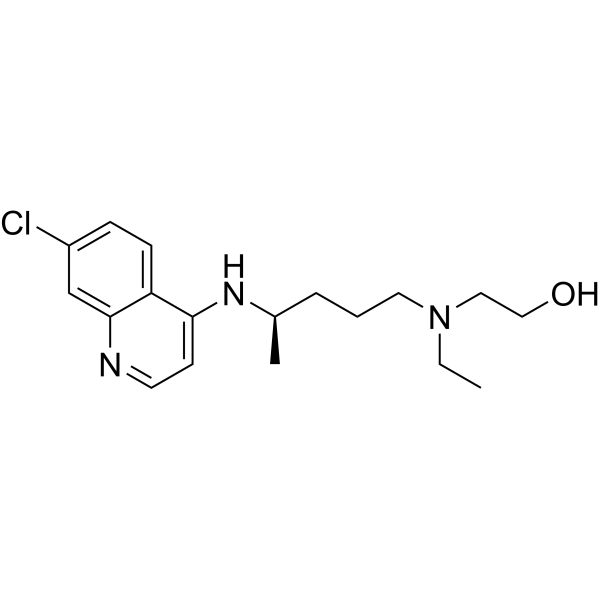 0 ImagesCat. No.: HY-B1370BCAS No.: 137433-23-9Synonyms: (R)-HCQ
(R)-Hydroxychloroquine is the enantiomer of Hydroxychloroquine. Hydroxychloroquine is a synthetic antimalarial agent which can also inhibit Toll-like receptor 7/9 (TLR7/9) signaling. Hydroxychloroquine is efficiently inhibits SARS-CoV-2 infection in vitro.
-
ETI41
 0 ImagesCat. No.: HY-178166CAS No.: 2773474-99-8
ETI41 is an orally active, selective TLR inhibitor that targets the nucleoside-binding Site I on TLR7 (IC50 = 0.63 μM) and TLR9 (IC50 = 0.16 μM), sparing surface TLRs (including TLR1/TLR2, TLR2/TLR6, TLR4 and TLR5). ETI41 potently inhibits endosomal TLR-mediated pro-inflammatory signaling with nanomolar activity in cellular, biophysical and in vivo assays. ETI41 suppresses the expression of inflammation-associated genes and effectively ameliorates symptoms in mouse models of psoriasis, and systemic lupus erythematosus (SLE). ETI41 can be used for autoimmune and inflammatory diseases research.
-
KBD4466
 0 ImagesCat. No.: HY-176553CAS No.: 3023713-87-0
KBD4466 is an orally active potent TLR7 and TLR8 inhibitor with IC50s of 0.9 nM and 2.8 nM, respectively. KBD4466 inhibits the expression of inflammatory cytokines IL-6 and IFN-α. KBD4466 improves disease progression and survival in the BXSB/MpJ mouse model of Systemic Lupus Erythematosus (SLE). KBD4466 can be used in the study of autoimmune diseases.
-
ABB071
 0 ImagesCat. No.: HY-P991956
ABB071 is a humanized anti-CD180 monoclonal antibody. ABB071 can down-regulate the highly expressed TLR7 and IRF5 genes in systemic lupus erythematosus and induce the expression of PNPT1 and DNASE1L3 genes. ABB071 can inhibit the expression of genes related to the type I interferon pathway as well as interferon-stimulated genes (ISGs). ABB071 has anti-inflammatory activity and can reduce the levels of inflammatory cytokines. ABB071 can be used for research on systemic lupus erythematosus and psoriasis.
-
TLR7-IN-1
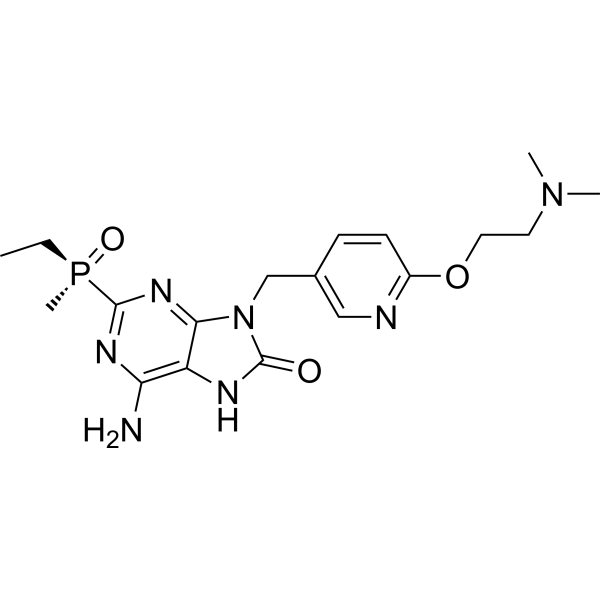 0 ImagesCat. No.: HY-163398CAS No.: 3026308-79-9
TLR7-IN-1 (Compound 16-A) is a TLR7 agonist with an EC50 of 0.001 μM. TLR7-IN-1 is applicable to cancer-related research.

-
TLR7 agonist 21
 0 ImagesCat. No.: HY-163670CAS No.: 3040038-00-1
TLR7 agonist 21 (Compound 27B) is a selective agonist for Toll-like receptor 7(TLR7), with an EC50 of 17.53 nM (for human TLR7) and 41.7 nM (for mouse TLR7). TLR7 agonist 21 stimulates the secretion of pro-inflammatory cytokines, such as IL-6, TNF-α, IFN-α1, and IL-4. TLR7 agonist 21 acts as a vaccine adjuvant, increases levels of IgG and IgA, and protects the mouse from influenza virus infections.
-
ETI60
 0 Images
ETI60 is an orally active, selective TLR inhibitor that targets the nucleoside-binding Site I on TLR7 (IC50 = 0.68 μM) and TLR9 (IC50 = 0.12 μM), sparing surface TLRs (including TLR1/TLR2, TLR2/TLR6, TLR4 and TLR5). ETI60 potently inhibits endosomal TLR-mediated pro-inflammatory signaling with nanomolar activity in cellular, biophysical and in vivo assays. ETI60 modulates the expression of genes associated with inflammation. ETI60 effectively ameliorates symptoms in mouse models of psoriasis, and systemic lupus erythematosus (SLE). ETI60 can be used for autoimmune and inflammatory diseases research.
-
DS-7011a
 0 ImagesCat. No.: HY-P992348
DS-7011a is a selective inhibitor targeting TLR7. DS-7011a inhibits IL-6 production induced by TLR7 stimulation and related responses in B cells and plasmacytoid dendritic cells. DS-7011a is internalized in a TLR7-dependent manner and accumulates in B cells, various dendritic cell subsets, and monocytes/macrophages. DS-7011a can be used in research related to systemic lupus erythematosus (SLE).
-
TLR9-IN-2
 0 ImagesCat. No.: HY-179209CAS No.: 2972638-16-5
TLR9-IN-2 (Compound 20) is a selective inhibitor of Toll-like receptor 9 (TLR9) with IC50 values for TLR9, TLR7, and TLR8 of 25, 1400, and > 50,000 nM respectively. TLR9-IN-2 can be used for the study of fibrosis, autoimmune and inflammatory diseases.
- 1
- 2



